1 The Lord is my shepherd; I have all that I need. 2 He lets me rest in green meadows; he leads me beside peaceful streams. 3 He renews my strength. He guides me along right paths, bringing honor to his name. 4 Even when I walk through the darkest valley,[a] I will not be afraid, for you are close beside me. Your rod and your staff protect and comfort me. 5 You prepare a feast for me in the presence of my enemies. You honor me by anointing my head with oil. My cup overflows with blessings.
As they were listening to these things, Jesus went on to tell them a parable because he was near Jerusalem, and they were thinking that the kingdom of God was going to appear immediately. So he said,
“There was a noble man who went into a distant country to receive a kingdom for himself and then to return. He called ten of his own servants and gave them ten minas [each equal to about one hundred day’s wages] and said to them, “Trade with these until I come.” His citizens hated him, and they dispatched an embassy after him, saying, ‘We do not wish this man to be king over us.‘ When he had received the kingdom and had returned, he ordered the servants to whom he had given the money to be called to him, that he might know what they had made by trading with it. The first came and said, ‘Sir, your mina has produced ten minas.‘ So he said to him, ‘Well done, good servant! Because you have shown yourself faithful in a little thing, you shall have authority over ten cities.‘ And the second came and said to him also, ‘Sir, your mina has made five minas.’ He said to him also, ‘You, too, are to be promoted over five cities.’ Another came to him and said, ‘Sir, here is your mina, which I was keeping laid away in a twoel, for I was a fraid of you, because I know that you are a hard man. You take up what you did not put down and you reap what you did not sow.’ He said to him, ‘Out of your own mouth I judge you, wicked servant. You knew that I am a hard man, taking up what I did not put down, and reaping what I did not sow. You ought, therefore, to have given my money to the bankers, so that when I came, I would have received it plus interest.’ He said to those standing by, ‘Take the mina from him and give it to him who has ten minas.’ They said to him, ‘Sir, he has ten minas [already!].’
I tell you, that to everyone who has it will be given; but from him who has not, even what he has will be taken away.
But as for these my enemies, who did not wish to have me as their king — bring them here and hew them to pieces in my presence
Commentary by Dr. Bill Barclay
“This is unique among the parables of Jesus, because it is the only one whose story is in part based on an actual historical event. It tells about a king who went away to receive a kingdom and whose subjects did their best to stop him receiving it. When Herod the Great died in 4 B.C. he left his kingdom divided between Herod Antipas, Herod Philip and Archelaus. That division had to be ratified by the Romans, who were the overlords of Palestine, before it became effective. Archelaus, to whom Judea had been left, went to Rome to persuade Augustus to allow him to enter into his inheritance, whereupon the Jews sent an embassy of fifty men to Rome to inform Augustus that they did not wish to have him as king. In point of fact, Augustus confirmed him in his inheritance, though without the actual title of king. Anyone in Judaea, on hearing the parable, would immediately remember the historical circumstances on which it was based.
The parable of the king and his servants illustrates certain great facts of the Christian life.
(i) It tells of the king’s trust. He gave his servants the money and then went away and left them to use it as they could and as they thought best. He did not in any way interfere with them, or, stand over them. He left them entirely to their own devices. That is the way in which God trusts us. Someone has said, “The nicest thing about God is that he trusts us to do so much by ourselves.”
(ii) It tells of the king’s test. As always, this trust was a test, of whether or not a man was faithful and reliable in little things. Sometimes a man justifies a certain large inefficiency in the ordinary routine affairs of life by claiming that “he has a mind above trifles.” God has not. It is precisely in these routine duties that God is testing men. There is no example of this like Jesus himself. Of his thirty-three years of life Jesus spent thirty in Nazareth. Had he not discharged with absolute fidelity the tasks of the carpenter’s shop in Nazareth and the obligation of being the breadwinner of the family, God could never have given him the supreme task of being the Savior of the world.
(iii) It tells us of the king’s reward. The reward that the faithful servants received was not one which they could enjoy by sitting down and folding their hands and doing nothing. One was put over ten cities and the other over five. The reward of work well done was more work to do. The greatest compliment we can pay a man is to give him ever greater and harder tasks to do. The great reward of God to the man who has satisfied the test is more trust.
(iv) The parable concludes with one of the inexorable laws of life. To him who has, more will be given; from him who has not, what he has will be taken away. If a man plays a game and goes on practising at it, he will play it with ever greater efficiency; if he does not practise, he will lose much of whatever knack and ability he has. If we discipline and train our bodies, they will grow ever fitter and stronger; if we do not, they will grow flabby and lose much of the strength we have. If a schoolboy learns Latin, and goes on with his learning, the wealth of Latin literature will open wider and wider to him; if he does not go on learning, he will forget much of the Latin he knows. If we really strive after goodness and master this and that temptation, new vistas and new heights of goodness will open to us; if we give up the battle and take the easy way, much of the resistance power we once possessed will be lost and we will slip from whatever height we had attained.
There is no such thing as standing still in the Christian life. We either get more or lose what we have. We either advance to greater heights or slip back.”
As they were listening to these things, Jesus went on to tell them a parable because he was near Jerusalem, and they were thinking that the kingdom of God was going to appear immediately. So he said,
“There was a noble man who went into a distant country to receive a kingdom for himself and then to return. He called ten of his own servants and gave them ten minas [each equal to about one hundred day’s wages] and said to them, “Trade with these until I come.” His citizens hated him, and they dispatched an embassy after him, saying, ‘We do not wish this man to be king over us.‘ When he had received the kingdom and had returned, he ordered the servants to whom he had given the money to be called to him, that he might know what they had made by trading with it. The first came and said, ‘Sir, your mina has produced ten minas.‘ So he said to him, ‘Well done, good servant! Because you have shown yourself faithful in a little thing, you shall have authority over ten cities.‘ And the second came and said to him also, ‘Sir, your mina has made five minas.’ He said to him also, ‘You, too, are to be promoted over five cities.’ Another came to him and said, ‘Sir, here is your mina, which I was keeping laid away in a twoel, for I was a fraid of you, because I know that you are a hard man. You take up what you did not put down and you reap what you did not sow.’ He said to him, ‘Out of your own mouth I judge you, wicked servant. You knew that I am a hard man, taking up what I did not put down, and reaping what I did not sow. You ought, therefore, to have given my money to the bankers, so that when I came, I would have received it plus interest.’ He said to those standing by, ‘Take the mina from him and give it to him who has ten minas.’ They said to him, ‘Sir, he has ten minas [already!].’
I tell you, that to everyone who has it will be given; but from him who has not, even what he has will be taken away.
But as for these my enemies, who did not wish to have me as their king — bring them here and hew them to pieces in my presence
Commentary by Dr. Bill Barclay
“This is unique among the parables of Jesus, because it is the only one whose story is in part based on an actual historical event. It tells about a king who went away to receive a kingdom and whose subjects did their best to stop him receiving it. When Herod the Great died in 4 B.C. he left his kingdom divided between Herod Antipas, Herod Philip and Archelaus. That division had to be ratified by the Romans, who were the overlords of Palestine, before it became effective. Archelaus, to whom Judea had been left, went to Rome to persuade Augustus to allow him to enter into his inheritance, whereupon the Jews sent an embassy of fifty men to Rome to inform Augustus that they did not wish to have him as king. In point of fact, Augustus confirmed him in his inheritance, though without the actual title of king. Anyone in Judaea, on hearing the parable, would immediately remember the historical circumstances on which it was based.
The parable of the king and his servants illustrates certain great facts of the Christian life.
(i) It tells of the king’s trust. He gave his servants the money and then went away and left them to use it as they could and as they thought best. He did not in any way interfere with them, or, stand over them. He left them entirely to their own devices. That is the way in which God trusts us. Someone has said, “The nicest thing about God is that he trusts us to do so much by ourselves.”
(ii) It tells of the king’s test. As always, this trust was a test, of whether or not a man was faithful and reliable in little things. Sometimes a man justifies a certain large inefficiency in the ordinary routine affairs of life by claiming that “he has a mind above trifles.” God has not. It is precisely in these routine duties that God is testing men. There is no example of this like Jesus himself. Of his thirty-three years of life Jesus spent thirty in Nazareth. Had he not discharged with absolute fidelity the tasks of the carpenter’s shop in Nazareth and the obligation of being the breadwinner of the family, God could never have given him the supreme task of being the Savior of the world.
(iii) It tells us of the king’s reward. The reward that the faithful servants received was not one which they could enjoy by sitting down and folding their hands and doing nothing. One was put over ten cities and the other over five. The reward of work well done was more work to do. The greatest compliment we can pay a man is to give him ever greater and harder tasks to do. The great reward of God to the man who has satisfied the test is more trust.
(iv) The parable concludes with one of the inexorable laws of life. To him who has, more will be given; from him who has not, what he has will be taken away. If a man plays a game and goes on practising at it, he will play it with ever greater efficiency; if he does not practise, he will lose much of whatever knack and ability he has. If we discipline and train our bodies, they will grow ever fitter and stronger; if we do not, they will grow flabby and lose much of the strength we have. If a schoolboy learns Latin, and goes on with his learning, the wealth of Latin literature will open wider and wider to him; if he does not go on learning, he will forget much of the Latin he knows. If we really strive after goodness and master this and that temptation, new vistas and new heights of goodness will open to us; if we give up the battle and take the easy way, much of the resistance power we once possessed will be lost and we will slip from whatever height we had attained.
There is no such thing as standing still in the Christian life. We either get more or lose what we have. We either advance to greater heights or slip back.”
1 The Lord is my shepherd; I have all that I need. 2 He lets me rest in green meadows; he leads me beside peaceful streams. 3 He renews my strength. He guides me along right paths, bringing honor to his name.Psalm 23:1-3
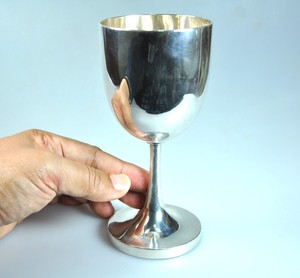
Be transformed by touch of God’s silver Wisdom, polished purity refined in blazing furnaces and bright as moonlight, free from blemish or blame.
Feel His Word’s entire essence enter your soul like solid silver’s smooth surface containingcool, deep inner spiritual truth and knowledge of the Lord, reflecting clear and freshly minted meditations in the night sky.
1 The Lord is my shepherd; I have all that I need. 2 He lets me rest in green meadows; he leads me beside peaceful streams. 3 He renews my strength. He guides me along right paths, bringing honor to his name.
Now when Jesus was at Bethany in the house of Simon the leper, a woman came up to him with an alabaster flask of very expensive ointment, and she poured it on his head as he reclined at table. And when the disciples saw it, they were indignant, saying, “Why this waste? For this could have been sold for a large sum and given to the poor.” NIV Matthew 26:6-9
The disciples reveal to us that the ointment used was expensive, but we do not know its exact cost. What makes the ointment so special and why is it so valuable? The ointment came for Northern India and was made of pure nard. The worth of the ointment was about a years worth of wages. Nard is made from a plant that grows in the Himalayas and is used as ointment or perfume. The cost of the ointment was worth…
Seven Woes on the Teachers of the Law and the Pharisees
23 “Woe to you, teachers of the law and Pharisees, you hypocrites! You give a tenth of your spices—mint, dill and cumin.
But you have neglected the more important matters of the law—justice, mercy and faithfulness. You should have practiced the latter, without neglecting the former.












 Bible About Money